KSTAR Beyond Backup Nigeria
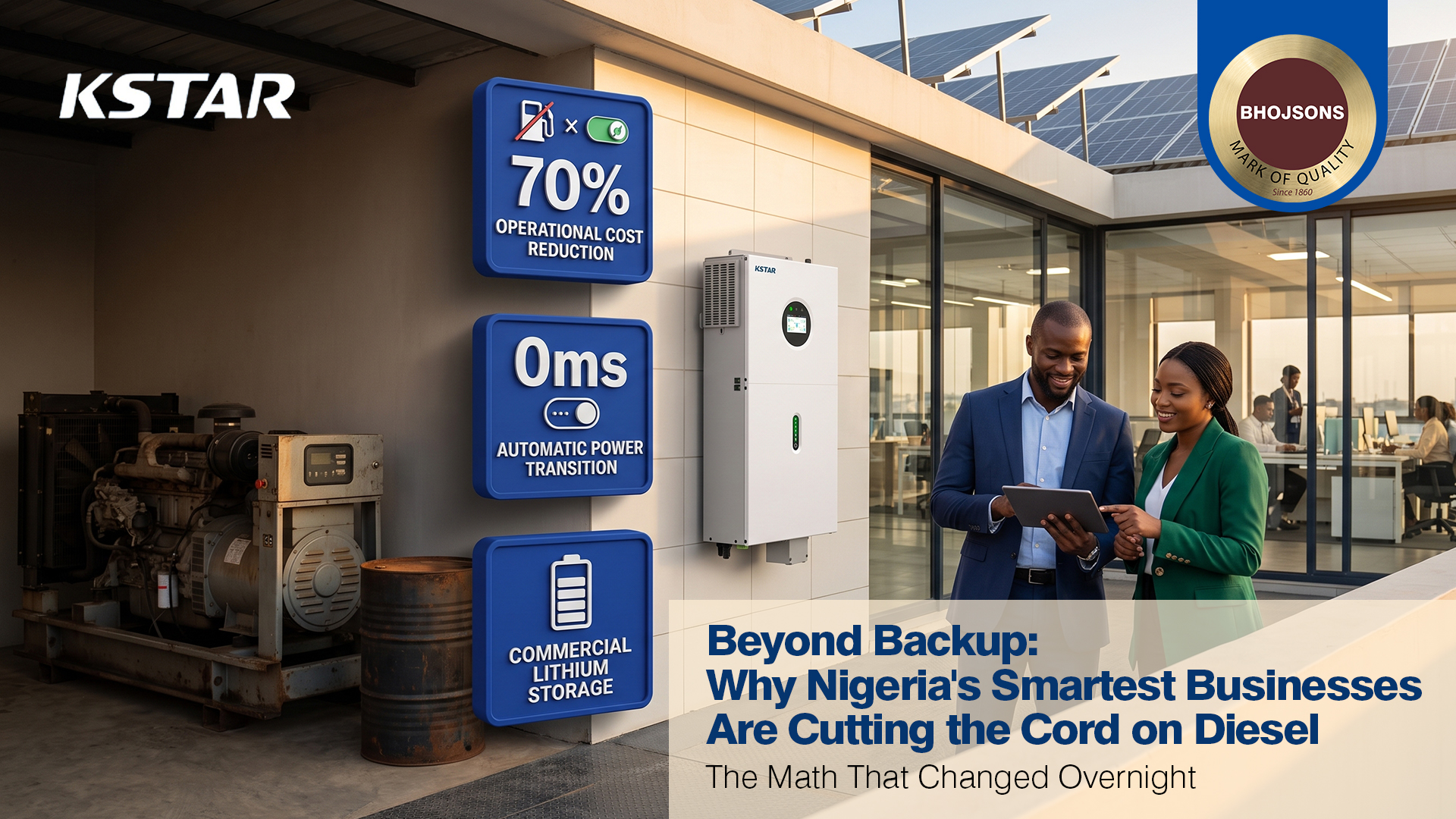
Why Nigeria’s Smartest Businesses Are Cutting the Cord on Diesel, where KSTAR comes beyond backup
KSTAR Beyond Backup – For years, the Nigerian generator was a fact of life — noisy, thirsty, but tolerated. You bought fuel, you accepted the cost, and you kept the business running. Then, almost overnight, the math changed.When Nigeria removed its fuel subsidy in May 2023, diesel prices roughly doubled, and for many businesses the generator stopped being an inconvenience and became a threat to survival [Payne Institute, 2026]. Suddenly, the thing keeping the lights on was also quietly draining the profit. Shop owners watched fuel swallow their margins. Manufacturers recalculated whether routes and product lines still made sense. A generator that once cost a manageable sum to run now devoured whatever the business earned.And in that moment, a quiet realisation spread across the country: the goal is no longer to
survive the next outage. The goal is to stop depending on diesel altogether. This is the shift from backup to
energy independence — and it is exactly the shift that brands like
KSTAR, distributed in Nigeria by
Bhojsons Group, are built for.
A Country That Runs on Diesel — and Pays Dearly for It
To understand why this matters, look at the scale of Nigeria’s dependence. The country operates an estimated 28 gigawatts of distributed diesel generator capacity — more than its entire on-grid power supply [Wood Mackenzie, cited in Payne Institute, 2026]. The Energy Commission of Nigeria has put national spending on generator fuel at as much as $22 billion a year [Energy Commission of Nigeria]. Across sub-Saharan Africa, generators supply only a small fraction of total electricity yet consume a staggering share of what is spent on power [Ember, 2025].In plain terms: Nigeria has been paying premium prices to keep noisy, polluting machines running — and after the subsidy removal, those prices climbed to levels that made the old model unsustainable. The International Renewable Energy Agency notes that Nigeria remains one of Africa’s largest importers of both fuel and diesel generators [IRENA] — a dependence that is now actively working against the businesses that rely on it.The question every serious operator is now asking is no longer “how do I get through the next blackout?” It is “how do I stop paying for diesel at all?”
From Surviving Outages to Owning Your Power
This is the crucial shift, and it is worth being precise about it.The old model was
reactive: keep a generator, keep fuel, and switch on when the grid fails. It kept you alive, but it kept you paying — for fuel, for servicing, for repairs, for the constant hum and fumes.The new model is
proactive: generate and store your own power, draw from the grid only when it suits you, and lean on diesel rarely, if at all. This is not merely a bigger battery. It is a different relationship with energy — one where the business owns its power supply rather than renting it, litre by litre, from the fuel station.Nigerian entrepreneurs are already living this change. Business owners who made the switch to solar-and-storage systems report energy-cost reductions in the range of 70% to 95%, along with near-silent operation and far lower maintenance [Nifue Energy, 2026]. One Abuja business owner, whose monthly energy bill had climbed above ₦200,000 and who had begun laying off staff to cope, described going solar as the best business decision he ever made [TG News, 2026]. The pattern repeats across the country: the pressure of diesel costs became the push that finally made independence worth the investment.This is precisely the territory
KSTAR is engineered for — not just backup, but genuine grid independence.
KSTAR: Reliable Power, Smarter Energy
KSTAR is a globally trusted name in power electronics, delivering high-performance UPS systems, inverters, and lithium energy storage for homes, businesses, and industry. Its promise in Nigeria is stated simply:
Reliable Power, Smarter Energy — Power You Can Trust. Smarter. Safer. Stronger.Where much of the market still sells “backup,” KSTAR is built around the more ambitious goal the moment now demands: hybrid, solar-ready systems designed to reduce reliance on expensive generators and move a home or business toward true energy independence. It is engineered specifically for Nigerian conditions — frequent outages, volatile fuel costs, and the punishing charge-and-discharge cycles of what the brand plainly calls “epileptic” power areas.
The Knight Off-Grid Solar Inverter — Built to Leave the Grid Behind
At the centre of the range sits the
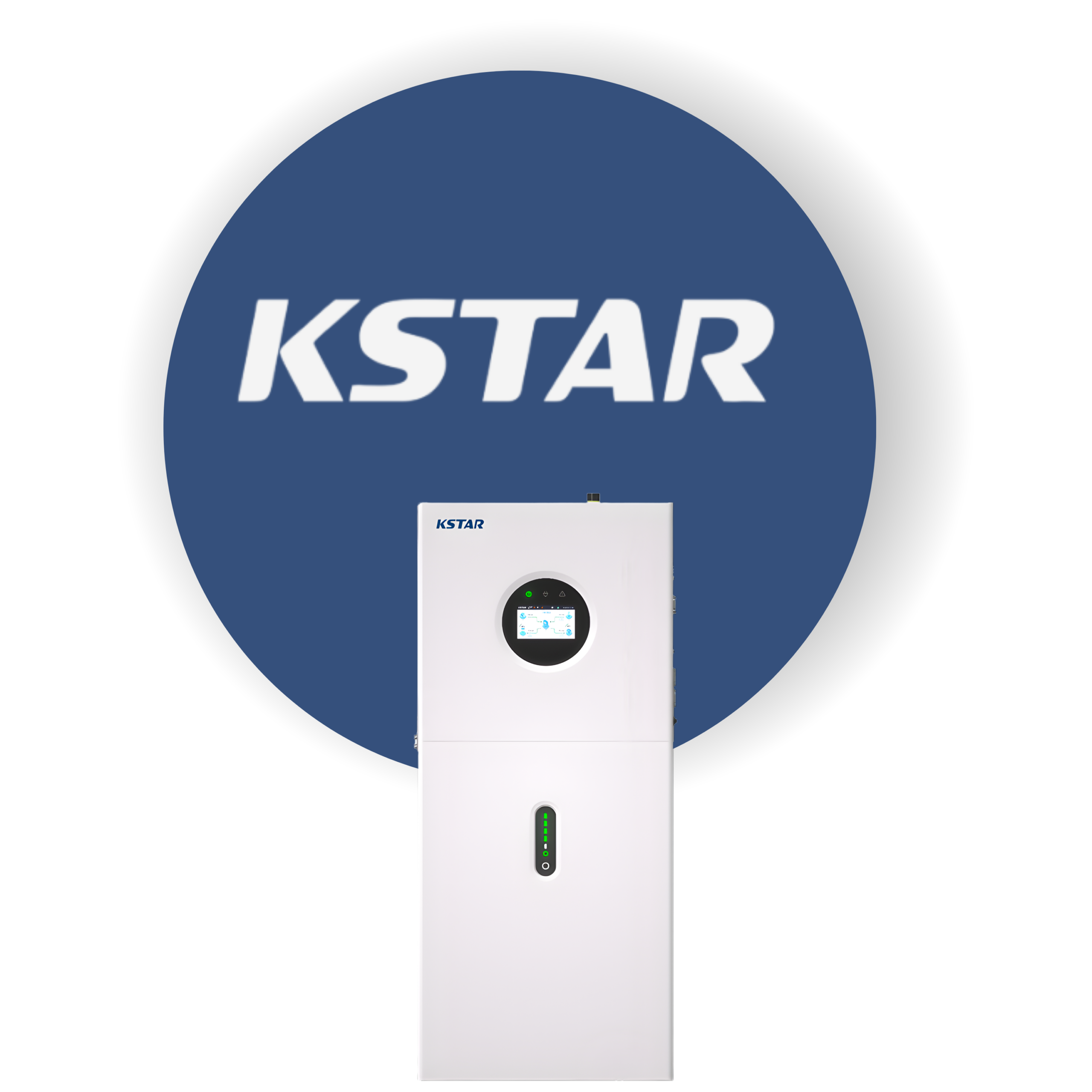
KSTAR Knight Off-Grid Solar Inverter (3.6kW / 6kW) — a system designed, in KSTAR’s own words, for “modern homes, remote offices, and SMEs looking to
Japa from the national grid.”Its engineering answers the exact pain points Nigerian users face. It delivers
efficiency of up to 93.5%, so almost none of the precious energy you store or generate is wasted. It is built with
6KV lightning protection to survive Nigeria’s heavy thunderstorms — a genuine, local design consideration, not a marketing line. It supports a
maximum charging current of 120A and is fully compatible with both lithium and lead-acid batteries, giving flexibility as budgets and needs evolve. And optional
app support lets an owner monitor their power situation directly from a smartphone. No-noise, hybrid-capable, voltage-protecting, and grid-independent — it is a machine built to make diesel optional.
Why the Battery Is the Real Game-Changer
An inverter is only as capable as the energy sitting behind it — and this is where KSTAR’s
Advanced Lithium Batteries shift the whole equation. For premium homes and high-demand commercial loads, these are the systems that make independence practical rather than theoretical.They are engineered to be
long-lasting and efficient, built to withstand the frequent charge-and-discharge cycles that destroy lesser batteries in Nigeria’s unstable power environment. They feature
smart Battery Management System (BMS) integration, protecting the cells from overcharging and overheating — a serious safety and longevity advantage in a market flooded with cheaper, riskier alternatives. And critically, they are
solar-ready: designed specifically to integrate with solar panels for true energy independence and reduced reliance on expensive generators. Operators have their own names for them —
deep-cycle king, fast-charge, zero maintenance, space saver — the language of people who have stopped worrying about power.Lower-quality batteries degrade fast, fail under heavy use, and quietly inflate long-term costs. A premium lithium system does the opposite: it holds more, lasts longer, and pays for itself across years of service. In an energy-independence system, the battery is not a component. It is the foundation.
The Real ROI: Independence Pays for Itself
It is natural to focus on the upfront cost of a solar-and-lithium system, because it is real. But that number tells only half the story.The honest comparison is not “inverter versus nothing.” It is “the one-time cost of independence versus the endless, rising cost of diesel.” A generator keeps charging you every single day it runs — for fuel that keeps getting more expensive, for servicing, for the replacement it will eventually need. A quality solar-and-storage system carries its cost mostly at the start, then quietly saves money for years, with minimal maintenance and no fuel queue. That is why the businesses that made the switch are reporting energy costs dramatically lower than before — and why capital once burned on diesel can instead go into growth, staff, or expansion.Reliability was always the reason to buy backup.
Independence is the reason to invest in KSTAR — and over time, it pays for itself.
Global Engineering, Local Assurance
None of this works without support on the ground — and a solar-and-lithium system is a long-term relationship, not a one-off purchase. That is where
BHOJSONS Group completes the picture.KSTAR brings decades of global power-electronics expertise; Bhojsons brings the local backbone that makes it dependable in Nigeria — an authorised support network, a nationwide presence of
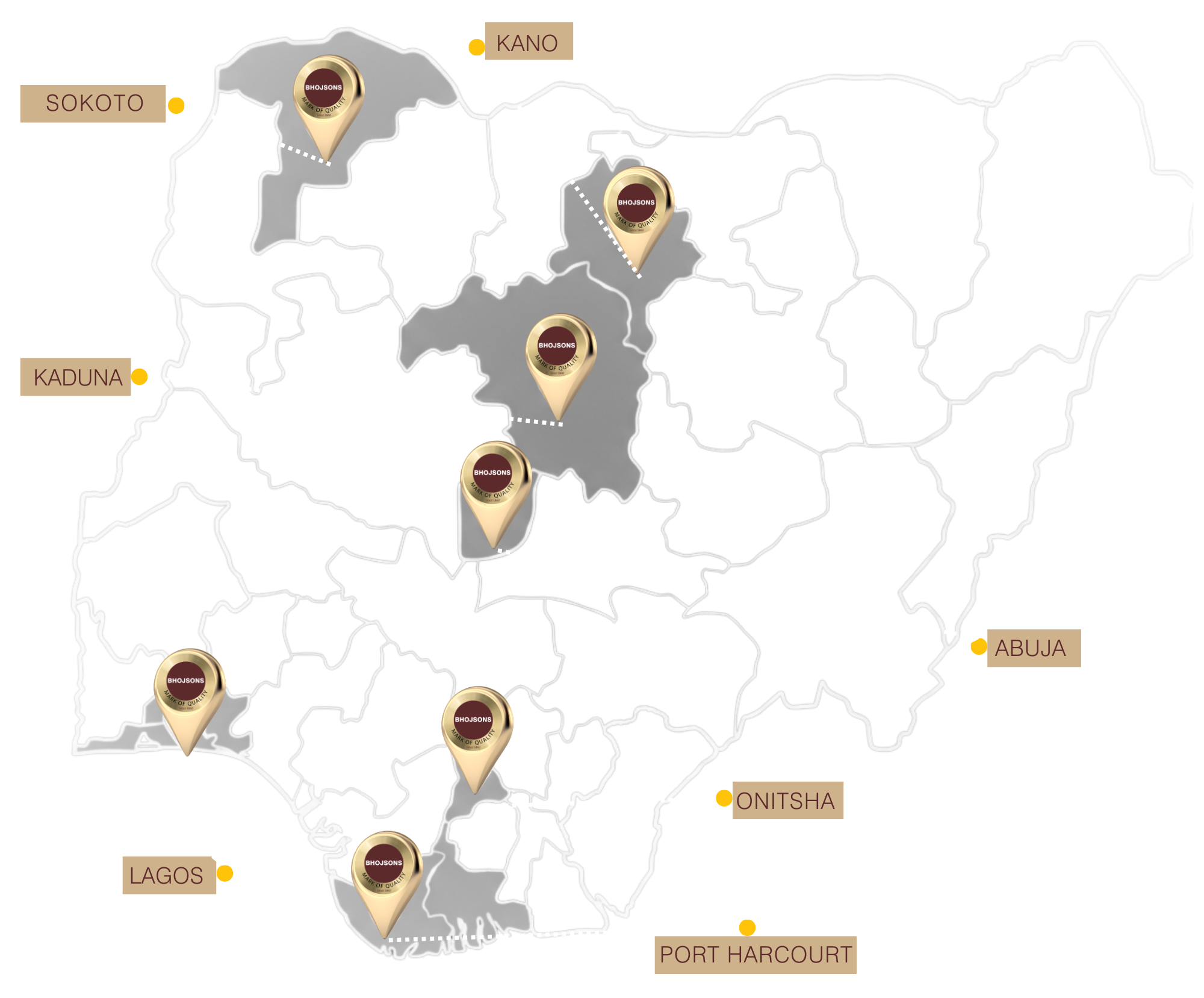
7 regional branches each with a redistribution warehouse, and the after-sales infrastructure that a serious energy investment requires. For a system meant to power a home or business for years, that assurance is not optional. It is the difference between a confident investment and a risky one.Every KSTAR system carries the Bhojsons
Mark of Quality — the endorsement of a business house with a legacy of over 160 years in Nigeria. On a decision this important, that trust matters.And because energy independence is a significant investment, Bhojsons Group’s finance partnership with
LAPO Microfinance Bank offers “Own Now, Pay Later” options — turning the upfront cost into manageable payments, so a business can start saving on diesel while still paying for the system that replaced it.
The Future Is Not Backup. It Is Independence.
For a generation of Nigerian homes and businesses, the generator was simply how you coped. But coping is expensive, and the economics have made that impossible to ignore. The smartest operators are no longer asking how to survive the next outage. They are building a future where the outage — and the fuel station — no longer controls them.Through
KSTAR, engineered for independence and backed by
Bhojsons Group, that future is within reach: quieter, cleaner, smarter, and in the end, cheaper. Because the goal was never just to keep the lights on when NEPA takes light.
The goal is to stop depending on diesel at all — and to finally own your own power.To design a KSTAR inverter, lithium, or hybrid-solar system for your home or business — or to ask about financing — visit bhojsonsgroup.com, or contact your nearest Bhojsons branch for a quote.References- Payne Institute for Public Policy. (2026). Africa’s Solar Inflection Point. https://payneinstitute.mines.edu
- (2025). Sub-Saharan Africa Generator Fuel Spending Analysis.
- International Renewable Energy Agency (IRENA). Renewable Energy and Nigeria’s Power Sector. https://www.irena.org
- Nifue Energy. (2026). From Diesel Dependence to Energy Independence.
- TG News. (2026). How Solar Saved My Business: Nigerian Entrepreneurs Beating High Energy Costs.